
SC Medicaid Enrollment for LPCs, LISW-CPs, LMFTs and Psychologists
By George Ruan • October 9, 2026
Last updated: October 9, 2026.
Start South Carolina Medicaid enrollment at the official provider enrollment application, reached through SCDHHS’s Become a Provider page. For independent behavioral health therapists, use the Licensed Independent Practitioner, or LIP, guidance. This article reflects public instructions checked October 9, 2026.
Sections
Which therapists can enroll as LIPs?
The July 2026 LIP manual lists LPCs, LMFTs, licensed independent social workers in clinical practice (LISW-CPs), licensed psychologists and licensed psycho-educational specialists. Use the clinical license category you actually hold; “social worker” by itself is not the manual’s independent clinical category.
The state still labels its manual entry page LIP Rehabilitative Services, while the current PDF is titled Licensed Independent Practitioner Behavioral Health Services. Use that entry point to find the current version rather than an archived manual with the older title.
Choose individual or group enrollment
For an individual application, the LIP manual’s enrollment table uses Individual, Other medical professionals, the applicable license specialty, and no subspecialty. For a group, it uses Organization, Groups and the applicable group specialty. Each LIP enrolls individually; the group needs its own NPI and Medicaid enrollment. A group’s approval does not enroll every therapist automatically.
Before selecting a classification, check the August 26, 2026 provider type and specialty list. Reconcile the applicant’s license, individual or organizational status and specialty. Do not select a nearby category simply because another practice used it.
The state’s currently linked Online Enrollment Application Visual Guide, updated July 2015, printed page 6 shows the Provider Type and Specialty/Subspecialty controls. Its example is a physician; use the current LIP classifications above rather than copying that sample specialty.
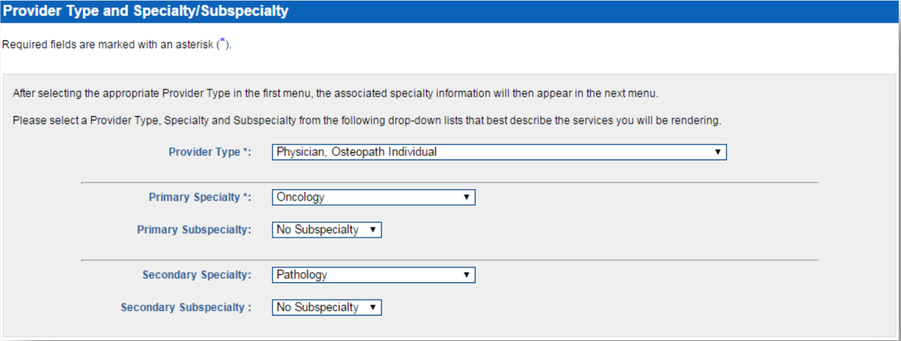
Screenshot source: Online Enrollment Application Visual Guide, July 2015, PDF page 8 / printed page 6.
Complete orientation and screening
The current LIP manual requires pre-enrollment orientation and a knowledge review with a score of at least 90%. Complete that requirement before the application. Use the training resources linked from the LIP manual page to find the state’s orientation.
The current specialty list marks individual LPC, LISW-CP, LMFT and psychologist entries high risk. The newer LIP manual describes fingerprint checks and pre-enrollment site visits, subject to its stated exceptions. Do not rely on an older FAQ’s limited-risk label to skip screening. For a group application, ask enrollment staff to resolve the group table’s classification against the manual’s group site-visit requirements before treating screening as complete.
Prepare and submit the application
Use the state enrollment page to reach the application and supporting resources. Assemble the documents requested for the actual provider category, and keep the individual and group records identifiable throughout the submission. The administrative manual entry point provides the general enrollment agreements and billing requirements alongside the LIP-specific guidance.
In Licenses, Certifications & Accreditation, enter the license type, category, license, state, number and effective/expiration dates requested for your category, then choose Add License. The July 2015 visual guide, printed page 12 illustrates these controls; use your own current license information.
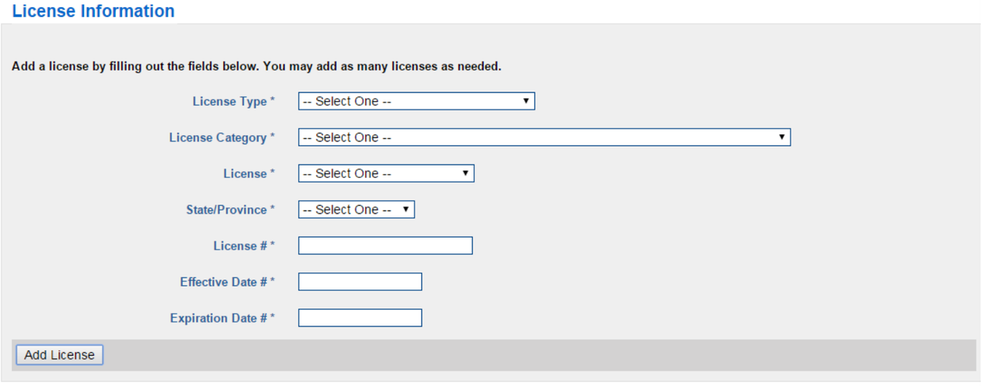
Screenshot source: Online Enrollment Application Visual Guide, July 2015, PDF page 14 / printed page 12.
Keep a record of what you submitted and respond to requests for missing information. Confirm the approved provider record and effective date before treating the application as complete. Approval should then be checked alongside MCO network participation, since state enrollment and a plan contract answer different questions.
Link an enrolled clinician to an existing group
The July 2026 change record adds a notarized individual request for group linkage. The manual, page 7, requires the individual’s business letterhead, the group Medicaid ID, the individual’s printed name and NPI, and a dated notarized signature. The group cannot submit that permission in place of the individual. Use the submission destination in the current manual.
Once the enrollment and group relationship are correct, set up Web Tool user access and check eligibility for the intended service date. Keep the enrollment decision, group linkage and plan contract confirmations together for the biller.
Frequently Asked Questions
Can LPCs, LISW-CPs, LMFTs and psychologists enroll in SC Medicaid?
The current LIP manual lists these independent professional categories. Select the actual license specialty and complete the applicable individual enrollment requirements.
Does a group Medicaid ID cover every therapist automatically?
No. The LIP manual requires individual enrollment and separate group enrollment. An enrolled individual joining an existing group must supply the required written permission with a notarized signature.
Should I use the older limited-risk label for individual LIP enrollment?
Use the newer guidance: the August 2026 specialty table marks the listed individual LIP categories high risk. Check the current manual and enrollment staff for the screening requirements that apply to your application.
Growing a group practice?
Bomi helps coordinate insurance operations across providers, payers, rosters, claims, denials, and reporting.
See group support
About Bomi
Founded by George Ruan, Dax Earl, and Andrey Goder, Bomi helps independent therapists and group practices with insurance billing, credentialing, and payer follow-up. Bomi grew out of Dax’s experience helping his mother with her therapy practice, with a clear purpose: reduce the administrative burden of insurance while keeping practice owners in control.
Meet our founders