
MHCP Therapist Enrollment: Individual, Group, and MPSE
By George Ruan • October 9, 2026
Updated October 9, 2026.
To enroll a therapist with Minnesota Health Care Programs (MHCP), start with the provider’s license-specific enrollment instructions and use MPSE for the appropriate individual or organization request. A group enrollment does not replace its clinicians’ enrollment, and state enrollment does not create a managed-care contract. Guidance below is checked as of October 9, 2026. MHCP enrollment overview.
If access is the immediate blocker, begin with MN–ITS login and MPSE account setup.
Sections
- Choose the right individual therapist enrollment
- Select FFS participation or MCO-only enrollment
- Apply for an individual through MPSE
- Enroll the group and affiliate the clinicians
- Check the solo LMFT pay-to exception
- Existing enrollment: update the record you already have
- How Bomi can help
- Related Minnesota guides
- Frequently Asked Questions
Choose the right individual therapist enrollment
MHCP has separate criteria for licensed independent clinical social workers (LICSWs), licensed marriage and family therapists (LMFTs), and licensed professional clinical counselors (LPCCs). Match the actual license and state-of-practice requirements; do not use “therapist” as a provider type. LICSW criteria.
Read the corresponding LMFT requirements or LPCC requirements before assembling the application. The LMFT page also specifies different enrollment treatment for someone who is also an LP or LICSW.
Select FFS participation or MCO-only enrollment
DHS-4138 is the agreement for fee-for-service (FFS) only or FFS plus managed-care organization (MCO) in-network participation. DHS-8355 is the MCO in-network-only agreement. Choose the intended state enrollment scope; neither agreement substitutes for a plan’s participation process. MHCP enrollment and MCO requirements.
For the contracting side, see MHCP FFS versus managed-care credentialing.
Apply for an individual through MPSE
Sign in using your own LoginMN account before opening MN–ITS. New users first complete the appropriate registration route. DHS LoginMN registration instructions.
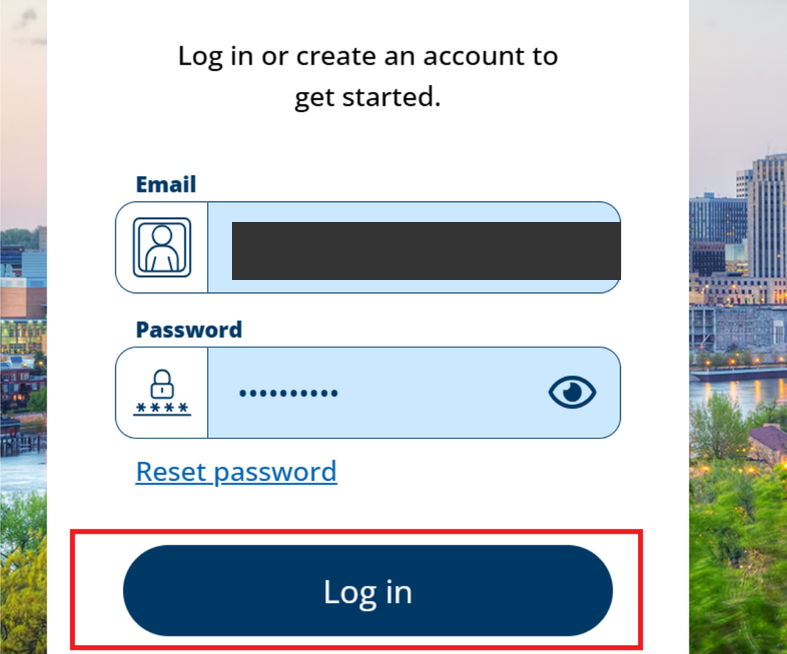
Screenshot source: MMB: Accessing the Capital Budget System for Local Governments (May 2025), PDF page 13, printed page 11 — shared LoginMN sign-in form only.
Select DHS MN–ITS from Minnesota Partner Apps. In MN–ITS, choose the Minnesota Provider Screening and Enrollment (MPSE) Portal link. DHS LoginMN guide and DHS New Profile Request manual.
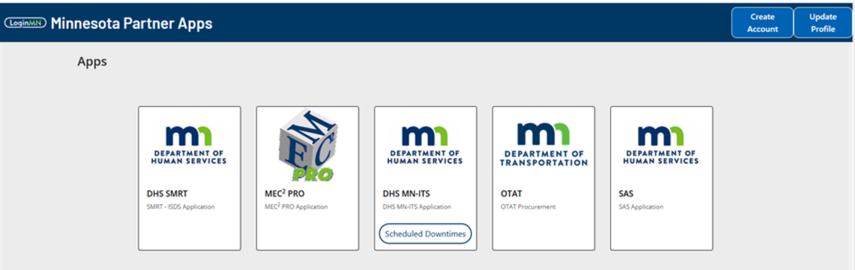
Screenshot source: DHS: LoginMN Registration Steps to Access MN–ITS, page 7.
Use the dedicated MPSE new-enroller registration route if this is a first enrollment. Already enrolled providers should work with their existing records.
Choose the individual new-profile instructions and enter the required legal, credential, service and location information.
Upload the license and appropriate provider agreement required by the license-specific page; complete all required sections before submission.
Track the request on Manage Portfolio and respond to requests for additional information. A submitted request is not an approval.
New Profile Request and its individual/organization guides describe the process. LPCC enrollment requirements illustrate the license and agreement uploads.
Review the Required But Missing Agreements/Addendums panel and upload the agreement required for your enrollment scope. The manual example shows DHS-4138; MCO-only enrollment uses the different agreement described above. DHS individual enrollment steps and current MHCP agreements.
MHCP also publishes provider-specific fax alternatives. Use those instructions rather than emailing an enrollment packet. Do not apply an individual checklist to an organization. MHCP submission instructions.
Enroll the group and affiliate the clinicians
The mental health group criteria require at least one enrolled eligible mental health provider affiliated with the group. The group has its own agreement and organizational enrollment information. CTSS or ARMHS certification, screening fees and other additional items apply in the circumstances described by DHS; they are not a blanket checklist for every outpatient therapy group. Mental health group criteria.
In MPSE, the organization-to-individual affiliation process connects the clinician to the selected organization enrollment record and effective dates. Search for the enrolled individual and use the applicable affiliation action. A roster in an office spreadsheet does not establish that state affiliation. Organization-to-individual affiliations.
Check the solo LMFT pay-to exception
The LMFT page specifically lists additional organization, ownership, provider-agreement and EFT notification forms for an LMFT who is in private practice and the pay-to provider. Follow that provider-specific instruction rather than assuming “solo” always means only an individual form. LMFT private-practice requirements.
For the separate state payment identifier, see what an MMB supplier ID means.
Existing enrollment: update the record you already have
An existing provider using MPSE for the first time may need both a global request and enrollment-record requests. Follow those update instructions rather than making a duplicate first-time application. Existing MHCP providers: first access.
How Bomi can help
Bomi can help organize enrollment, payer follow-up and billing work. If you want help with your Minnesota workflow, contact Bomi and identify the task that is blocked.
Related Minnesota guides
Give Bomi scoped MN–ITS/MPSE access. Keep enrollment current through revalidation.
Frequently Asked Questions
Does MHCP group enrollment cover every therapist automatically?
No. The mental health group must have eligible enrolled affiliates. Review each clinician’s enrollment and the organization-to-individual affiliation.
Which agreement is used for MHCP FFS versus MCO-only enrollment?
DHS-4138 covers FFS only or FFS plus MCO in-network participation. DHS-8355 is the MCO in-network-only agreement. Separate plan participation still applies.
Is a solo therapist always an individual-only application?
No. Follow the license-specific instructions. The LMFT enrollment page lists additional organization and payment forms for a private-practice LMFT who is the pay-to provider.
Growing a group practice?
Bomi helps coordinate insurance operations across providers, payers, rosters, claims, denials, and reporting.
See group support
About Bomi
Founded by George Ruan, Dax Earl, and Andrey Goder, Bomi helps independent therapists and group practices with insurance billing, credentialing, and payer follow-up. Bomi grew out of Dax’s experience helping his mother with her therapy practice, with a clear purpose: reduce the administrative burden of insurance while keeping practice owners in control.
Meet our founders