
NJ Medicaid Behavioral Health Claims: MCO or Fee-for-Service?
By George Ruan • October 9, 2026
Before submitting a New Jersey Medicaid behavioral-health claim, identify the payer responsible for that member, service and date. The current state integration resources confirm that Phase 1 outpatient behavioral health is integrated into managed care. Having an NJMMIS login does not make Gainwell the correct destination for every therapy claim.
Sections
Start with the member’s benefit and service date
Use REVS or eMEVS eligibility verification and confirm the actual managed-care enrollment. Then match the service to current integration rules. The official DMAHS list identifies the five MCOs, while the current behavioral-health page and August implementation slides identify service and transition boundaries.
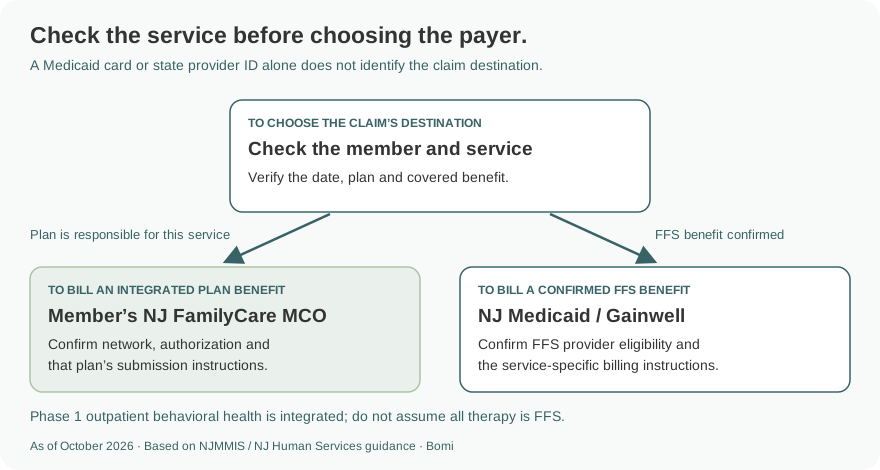
Independent-practitioner outpatient psychotherapy belongs to Phase 1’s integrated scope. Other settings, special populations and services need their own determination. Phase 2’s January 2027 target is a future date as of October 9, 2026. Do not send a service to FFS simply because an older training document predates integration.
Confirm the billing and rendering provider relationship
The readiness packet distinguishes full FFS from Cures MCO-only enrollment and individual from group relationships. MCO-only enrollment cannot authorize an FFS claim. For a plan benefit, confirm the clinician’s network participation, the billing entity’s contract and any required association or authorization with that plan.
Check the service’s current code, diagnosis, units, modifiers and place of service against the responsible payer’s requirements. Use instructions for the actual therapist license and service setting. A physician training example or an institutional claim layout does not establish independent LPC, LMFT or LCSW billing rights.
Use the responsible payer’s submission instructions
For an MCO claim, follow that plan’s current electronic or other accepted submission route. Verify the relevant payer identification and benefit routing with the plan or clearinghouse; there is no single payer ID in this guide that safely covers all NJ FamilyCare plans and services.
For a confirmed FFS professional claim, use the applicable NJMMIS provider instructions and the billing supplement. The supplement describes electronic and direct-entry processing and claim-status resources. It should not be used as a source for another profession’s procedure eligibility or current plan network rules.
The HIPAA Submitter Login is a separate identity for registered electronic submitters. Provider website access does not automatically enroll a clearinghouse or authorize an electronic submission relationship. Check who is actually submitting and where the acknowledgments will return.
An acknowledgment is not a paid claim
After submission, preserve the actual receipt and claim reference returned by the responsible payer or clearinghouse. An accepted file is not the same result as an adjudicated claim. The NJMMIS billing supplement describes claim references, status inquiries and remittance information; use the appropriate stage to determine whether the issue is rejection, processing, denial or payment.
Review the remittance against the claim and the payment record. If a claim appears missing, search status and inspect acknowledgments before resubmitting. Resolve the actual rejection or denial reason rather than changing the payer, code or rendering provider merely to get a different response. Follow payer instructions for a corrected claim, appeal or timely-filing evidence.
What about transition-era out-of-network claims?
All Phase 1 plan transitions have ended according to current state guidance. Temporary protections should not be treated as permanent contracts. The Fidelis payment-floor cutoff in December 2026 has source wording differences; confirm the applicable date and terms directly rather than promising indefinite FFS-level payment.
Related guides
Separate state enrollment from MCO credentialing, set up individual NJMMIS access, and check telehealth conditions.
Frequently Asked Questions
Do NJ Medicaid therapy claims always go to Gainwell?
No. Phase 1 outpatient behavioral health is integrated into managed care. Confirm the member, service, program and date before choosing an MCO or FFS destination.
Can I send an FFS claim with Cures Act MCO-only enrollment?
No. MCO-only enrollment does not permit FFS billing. Confirm the provider’s approved enrollment and the service’s responsible payer.
Does a clearinghouse acceptance mean NJ Medicaid paid my claim?
No. Submission acknowledgment, adjudication and payment are separate stages. Review the claim status, remittance and actual payment record.
Does my NJMMIS provider password also work for HIPAA submission?
Do not assume so. NJMMIS lists a separate HIPAA Submitter Login for registered electronic submitters.
Want Bomi to handle insurance billing?
Bomi helps therapy practices with benefit checks, claims, denials, balances, CAQH, attestations, and revenue management.
Book a call
About Bomi
Founded by George Ruan, Dax Earl, and Andrey Goder, Bomi helps independent therapists and group practices with insurance billing, credentialing, and payer follow-up. Bomi grew out of Dax’s experience helping his mother with her therapy practice, with a clear purpose: reduce the administrative burden of insurance while keeping practice owners in control.
Meet our founders